
Home Assistant just opened a public preview of its Device Database, a searchable tool built from anonymized data that real users choose to share with the Open Home Foundation. The idea has been in the works since last year, and now it is here for anyone to browse. Here is what it does today, why it exists, and where it still falls short.
What is the Home Assistant Device Database
The Device Database is a community powered resource run by the Open Home Foundation. It pulls together anonymized device data from Home Assistant instances of users who opt in, then aggregates it into device stats you can actually search and filter.
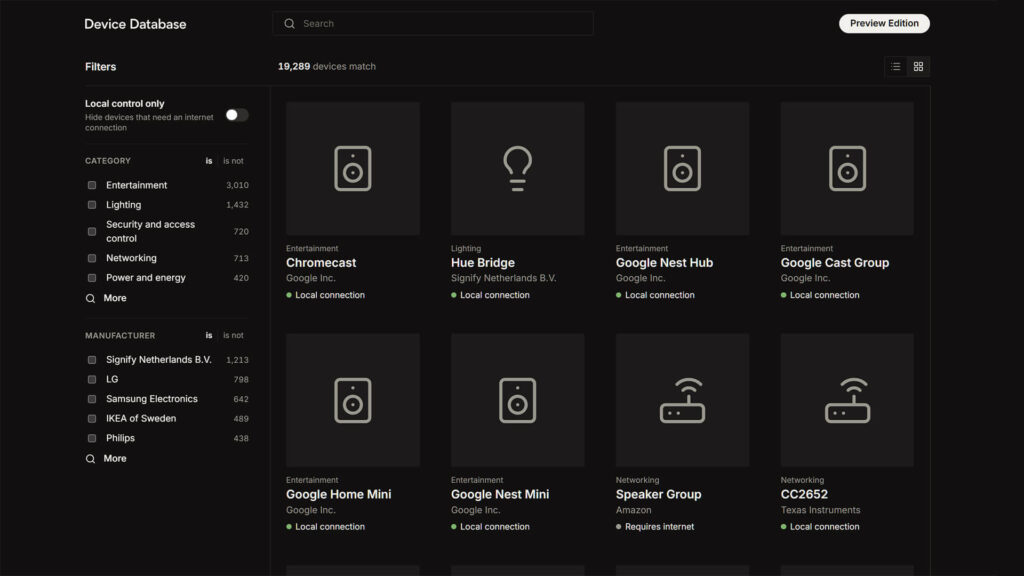
Right now the scope is narrow on purpose. You can look up a device and see whether it needs an internet connection to work, which integrations are people using it with and which entities it exposes in Home Assistant. No reviews, no spec sheets, no forum drama. Just numbers pulled from real-world setups.
The numbers are great for spotting trends across a category like energy monitoring and see which devices people use the most. What they will not tell you is how a specific device feels to set up, or how it holds up after months of daily use like hands on reviews.
Why Home Assistant needed this in the first place
A raw spec sheet will tell you a motion sensor supports Zigbee. It will tell you it can communicate over distances up to 30 meters, and you will know if the device is waterproof or not. You can find out the battery type it uses and what are its dimensions.
However, it will not tell you whether that sensor is actually supported in ZHA in Home Assistant. It will not tell you which entities are exposed, or whether it behaves the same way across different Zigbee coordinators and integration combinations out there, the kind of detail we like to dig into in SmartHomeScene. It will never replace that hands on depth, but answering those questions at scale is the core idea behind the Home Assistant Device Database.
The idea was first floated at State of the Open Home 2025, and the first concrete step came in February 2026. Home Assistant added Device Analytics as an opt in feature in Labs, part of the 2026.2 release. Foundation members, commercial partners, and a group of invited users opted in first, and that early phase alone produced over 2,000 unique devices tracked across more than 160 integrations.
That early data set was the proof of concept. Enough people opted in during those months that the Open Home Foundation felt confident opening a public interface, which landed on July 23, 2026 as the preview you can browse today. It follows the same build in public approach we saw recently with phone free Matter commissioning, ship the rough version first, then refine it with real feedback.
Device Database vs Works with Home Assistant program
It is worth being clear about how this differs from Works with Home Assistant, since the two sound very similar at first. Works with Home Assistant is a certification program. The Open Home Foundation team physically tests each device in house, and the manufacturer signs a binding commitment to long term firmware support before that device earns the badge. It is a smaller, curated list built on deliberate, hands on verification.
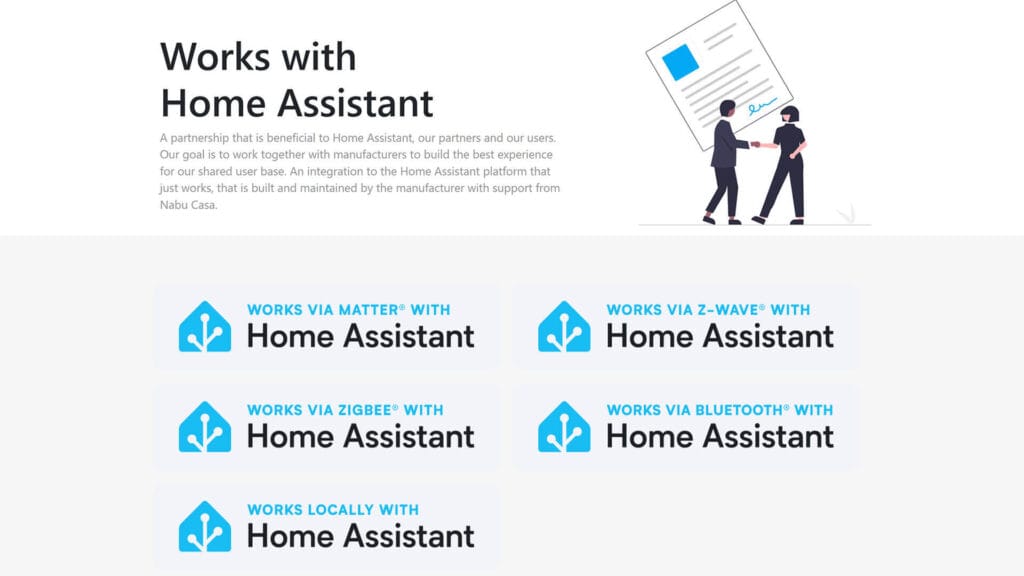
The Device Database is not a certification program. Nobody on staff is testing thousands of devices one by one. The data comes from anonymized data collection across thousands of real Home Assistant installs, which is exactly why the list can already be this large while Works with Home Assistant stays selective by design.
Think of it this way. Works with Home Assistant tells you a manufacturer stood behind a specific device and had it verified, promising firmware and updates and full local integration. The Device Database tells you how that device, or one nobody has certified at all, actually behaves once it lands in thousands of different homes. Neither replaces the other. I would use Works with Home Assistant to shortlist trustworthy brands, then check the Device Database to see how a specific model holds up at scale, whether that is a Zigbee sensor or a Thread border router quietly running in the background.
It is a preview, so here is what is missing
The Open Home Foundation is upfront that this is not the finished product. There is no official name for the tool yet. The interface is functional but unpolished, and bugs are expected.
A few practical limits worth knowing before you go looking for something specific:
- Devices only show up once enough independent submissions have been validated, so a niche device might not appear even if you already opted in.
- Custom integrations and service type devices are excluded from this phase entirely.
- You cannot edit or add details to a device page yet. Direct community contributions are planned for the future.
None of this is a knock against the project. Shipping something narrow and rough before it is polished is exactly how you find out what people actually need from it, instead of guessing behind closed doors. In time, I fully expect it to grow with much more valuable data for end users. You won’t ever find teardown photos like these of the Aqara FP300 [Amazon] or verdicts on whether a device is actually worth buying. But having a real-world database of devices is a very useful resource and at least a base to start researching.
How to contribute and try it out
You can browse the preview database right now without doing anything else. If you want to help grow the data behind it, enable Device Analytics from the Labs menu in your own Home Assistant instance.
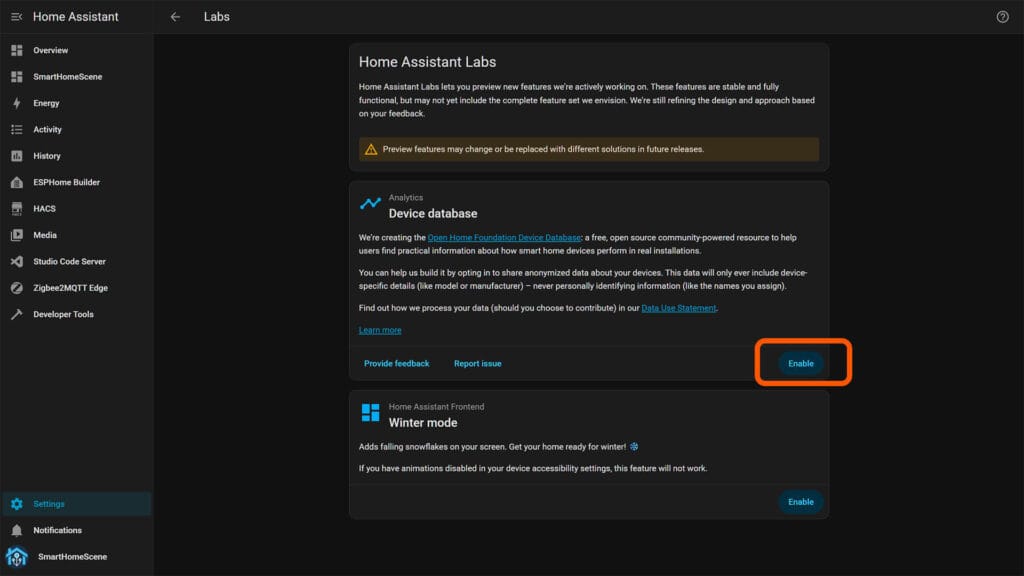
You can also provide feedback through a dedicated Discord channel the Open Home Foundation set up for this specifically. They are asking for the obvious stuff, what is missing, what is confusing, what would actually make you trust the numbers you see.
This is being framed as a multi year effort rather than a single launch, a marathon rather than a sprint. I fully expect this preview to look pretty different a year from now, and we will keep tracking it here on SmartHomeScene as it grows.