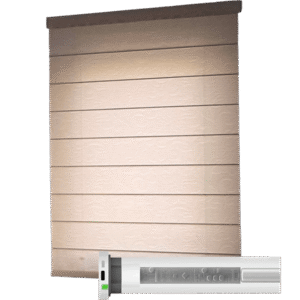

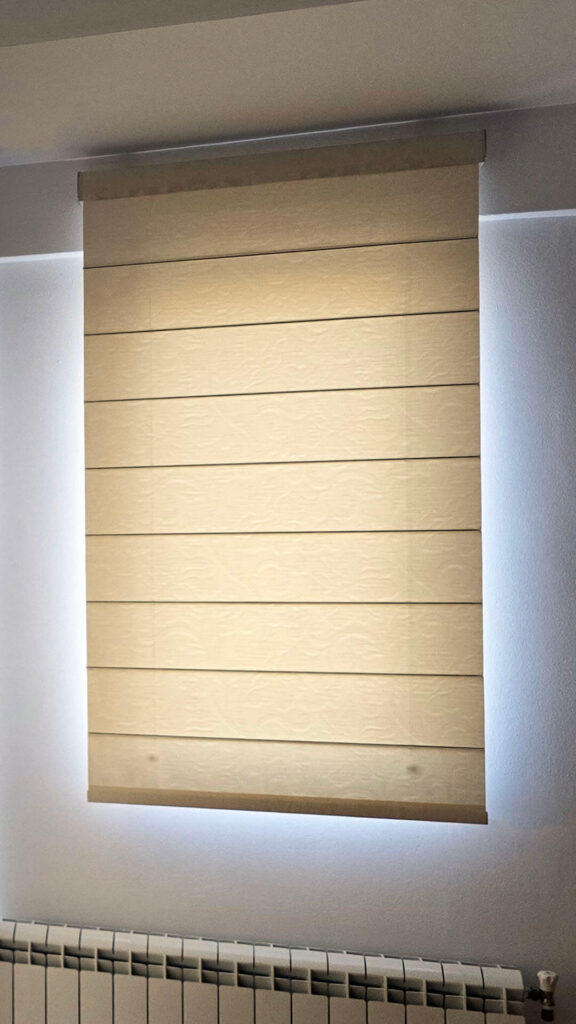
The Graywind Motorized Roman Shades are custom made fabric shades with an optional Matter over Thread motor that works natively with any Matter controller. I installed five of them over the weekend at a friend’s apartment. He went with the Floral Beige light filtering fabric, with all five in different sizes.
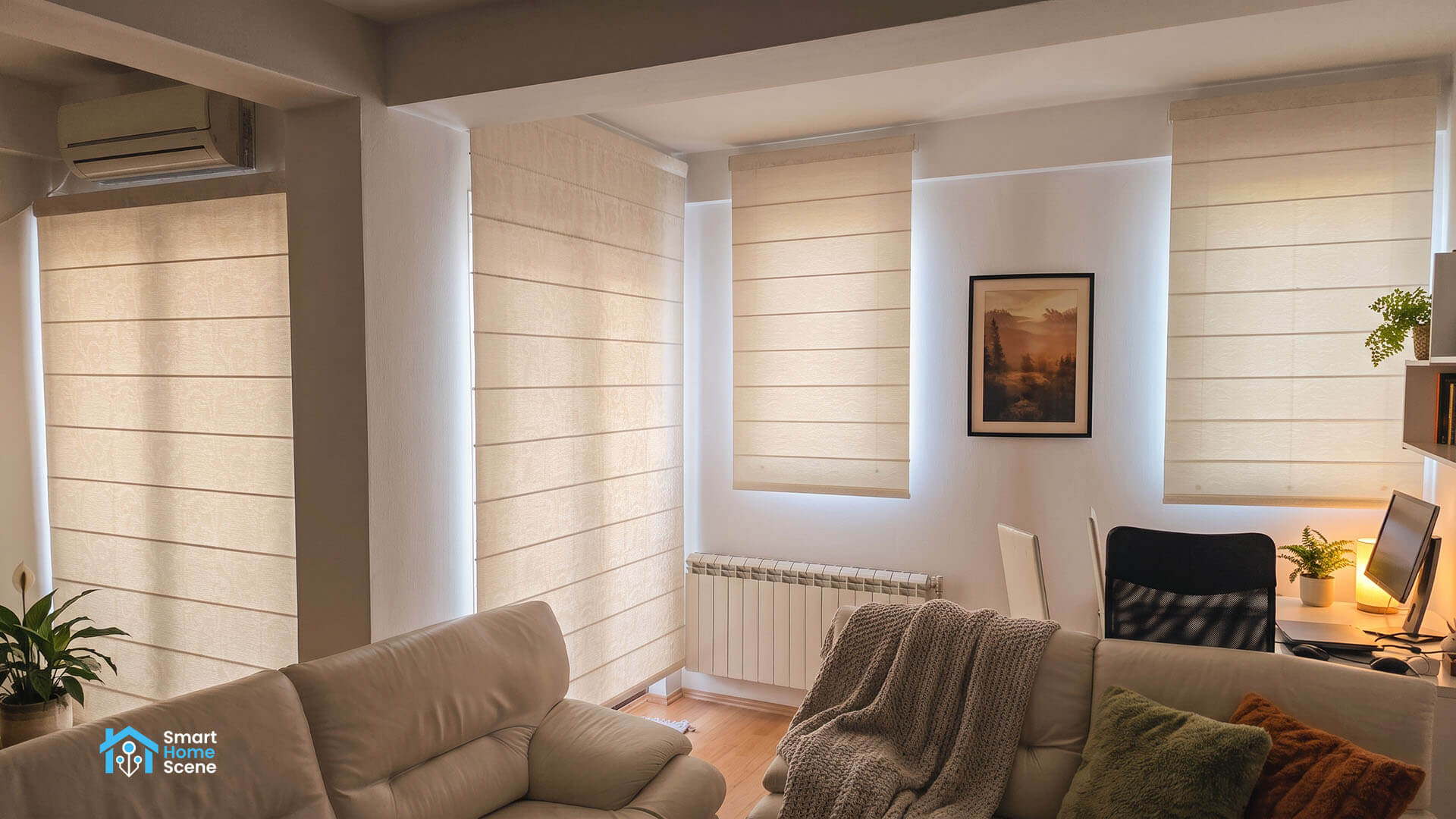
This article covers what we ordered and how the install went. It also covers important things to be mindful of when you order, as Roman shades are not like typical roller shades. They need special mounting considerations and planning, as well as more precise sizing.
What Are Graywind Roman Shades
Graywind is a brand that produces various cut-to-order window coverings and sells them directly. A while back, I installed and tested their beautiful Shangri-La shades, which I think are one of the best looking window coverings you can get. Shangri-La shades have soft horizontal fabric vanes suspended between two layers of sheer fabric, making them look very modern and unique.
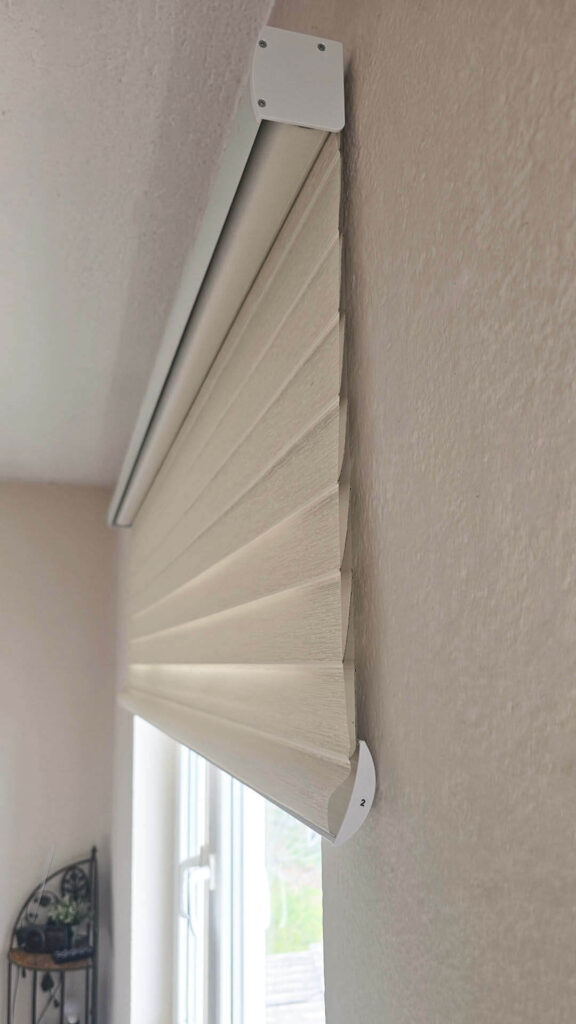
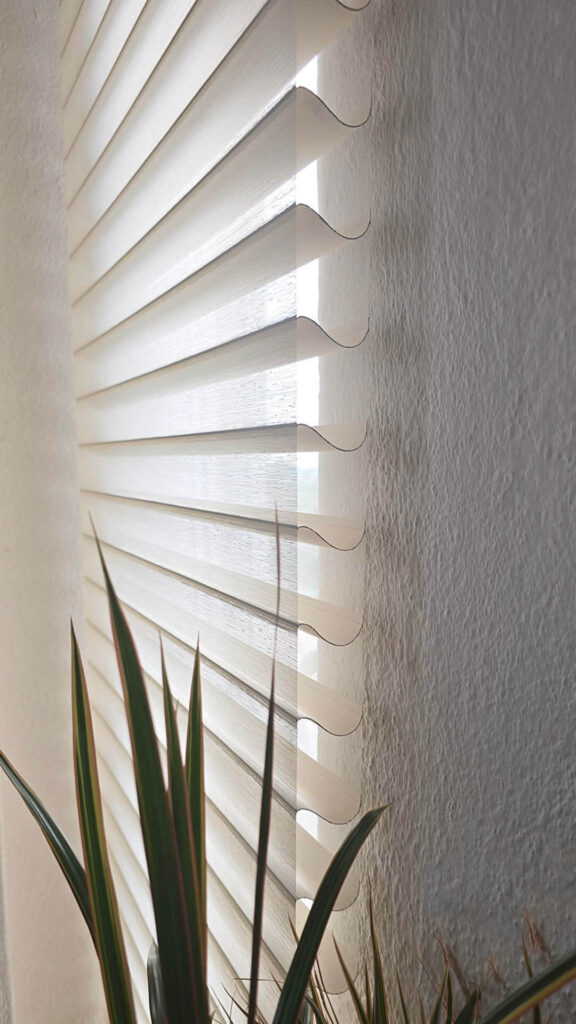
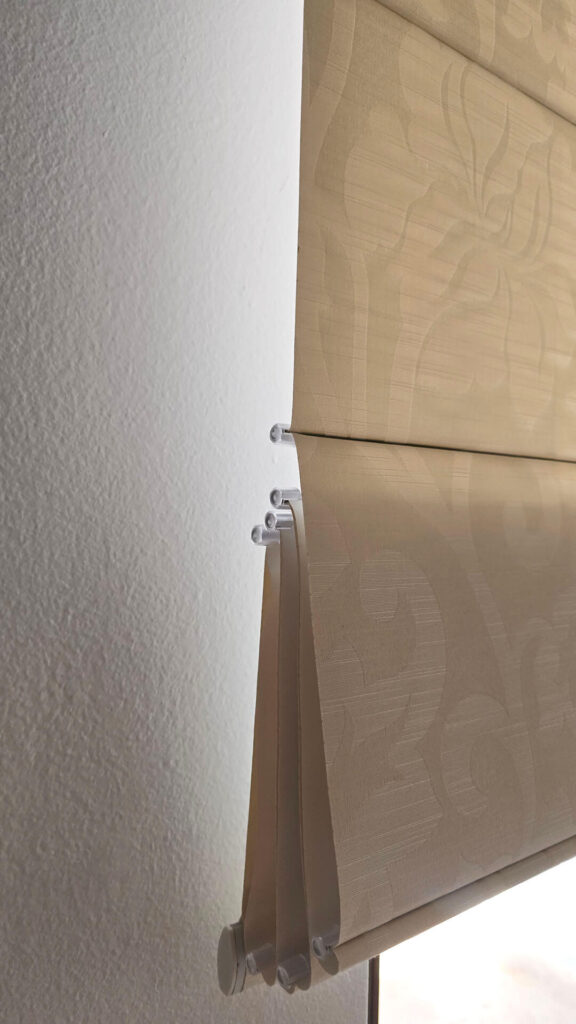
The Roman shades we installed this time are a completely different style. They are more drapery-like and come in several fabric series, including blackout, light filtering and semi-sheer. We went with light filtering for this apartment, since it softens daylight and adds privacy without completely darkening the room. Roman shades have a slab-like drapery style, with a filtering fabric of your choosing on the back side.
The light filtering series has six colors that you can choose from. These are Floral White, Floral Beige, Floral Grey Brown, Matelasse White, Matelasse Lime White and Matelasse Grey. If you are unsure which one to pick, you can always order fabric samples from Graywind.
Every shade is built to the size you order and Graywind emails you within 12 hours to confirm your measurements. Production then takes 3 to 5 days, and delivery adds another 5 to 7 days. Shipping is free and the shades carry a 5 year warranty.
Blackout, Light Filtering or Semi-Sheer Fabric
Graywind sells its Roman shades in three light control levels, and some fabrics come with a percentage rating. That number tells you how much light the fabric blocks. For instance, a 40% rating means the fabric stops about 40% of the incoming daylight and lets the other 60% through. The higher the number, the darker the room and the more privacy you get.
Blackout fabric sits at the top of the scale. It blocks almost all daylight, which makes it the right pick for bedrooms, nurseries and media rooms. It works great for dark rooms, but keep in mind that a small amount of light still slips in around the edges of any shade, so the room gets very dark but not pitch black.
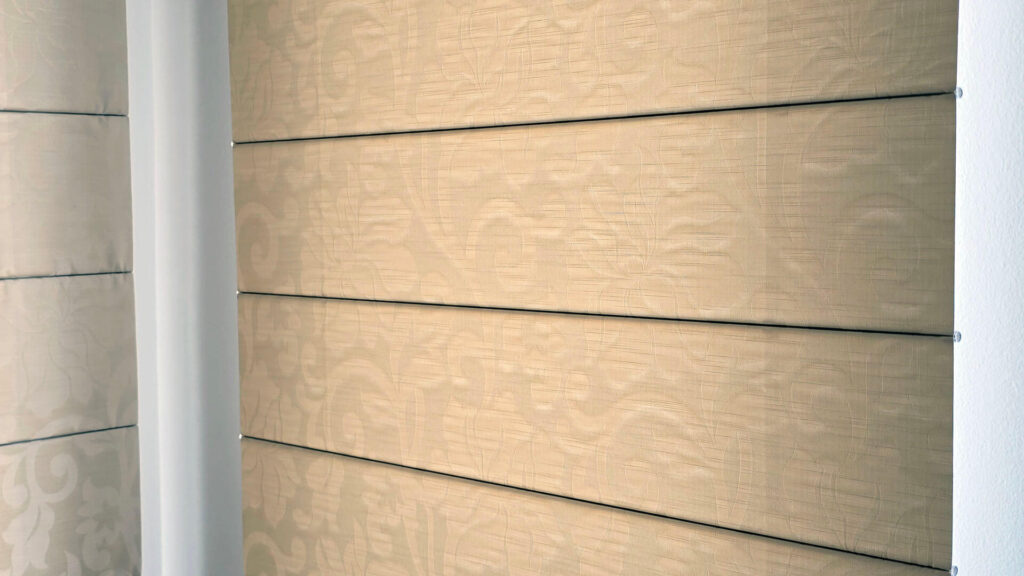
Light filtering is the middle option and the one we picked for this apartment. The fabric softens and spreads daylight instead of blocking it, so the room stays bright without harsh sun or glare. You still get privacy during the day, since people outside cannot see in clearly. It suits living rooms, dining rooms and kitchens where you want daylight but not direct sun.
Semi-sheer and sheer fabrics let the most light through. The semi-sheer Nature series is rated at 40% blackout, so it lets about 60% of daylight in. The sheer series is rated at 20% blackout and lets about 80% through. Both give a bright and airy look with some daytime privacy. At night, with the lights on inside, people outside can see in, so these work best as a decorative layer.
Size, Mounting Type and Fabric Style
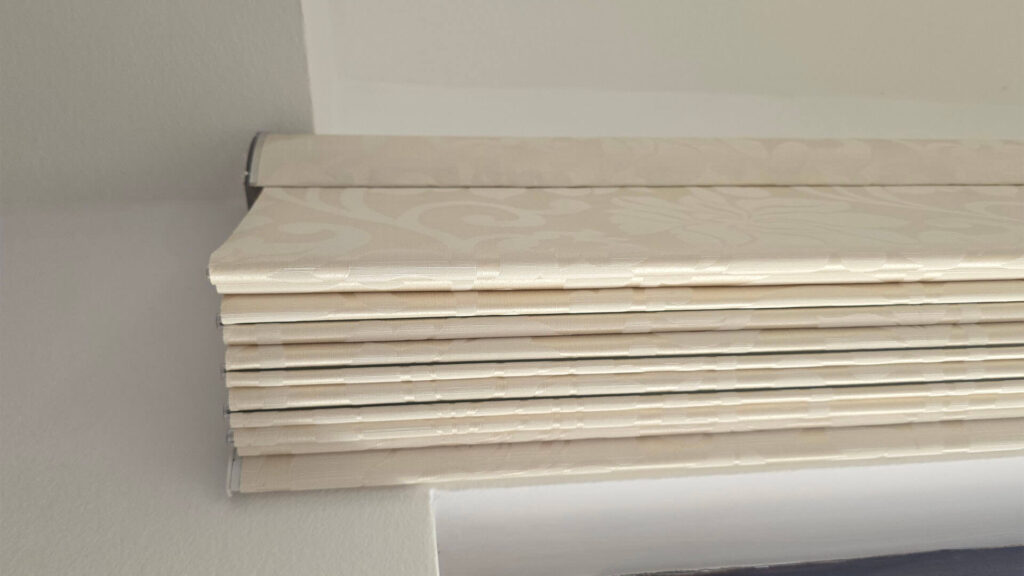
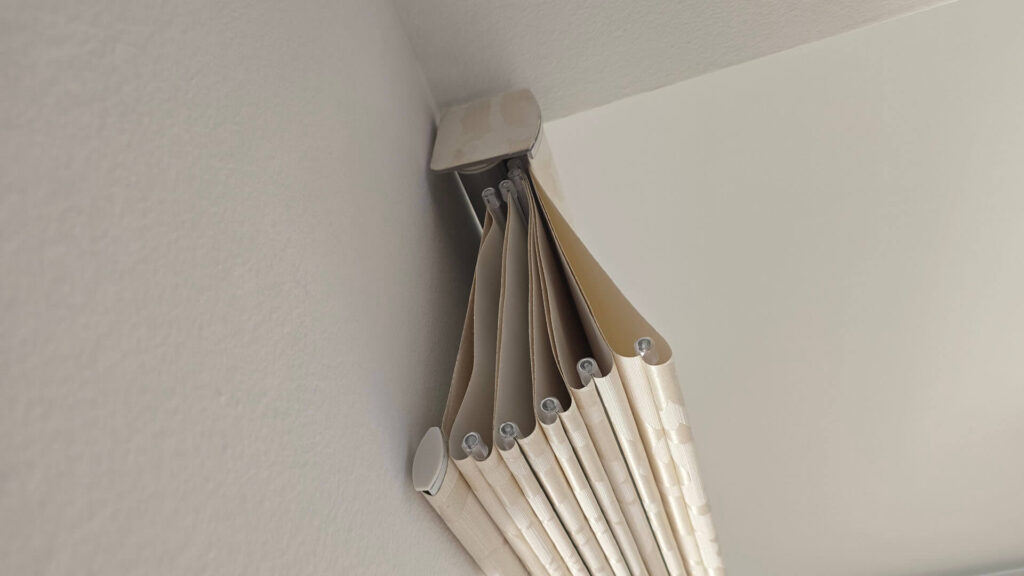
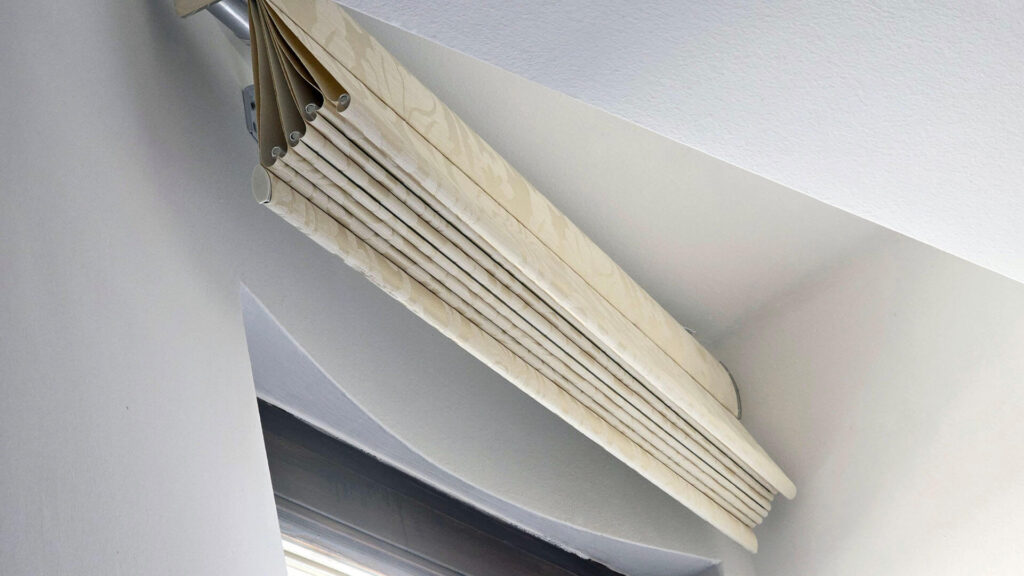
The next thing to decide is the size and mounting position. This is the one part you need to plan for and get right. Roman shades do not roll around the motor tube like roller shades. The fabric lifts and collects at the top in folded layers, and those layers take up more height than a rolled fabric tube.
In this apartment, I needed a comfortable 30 cm above each opening. Without that space, the raised stack hangs down over the window or door. On a door or an inward opening window, it gets in the way and you cannot open it.
Because of this, your dimensions also need to be exact. Further, every fold of a Roman shade stays visible, and there is no tube to absorb extra fabric. With a roller or zebra shade, a drop that comes out too long is easy to fix. You set the bottom limit higher and the extra fabric stays rolled on the tube. A Roman shade gives you no such margin, so a wrong measurement shows.
Therefore, you need to measure carefully before you order. For an outside mount, place the cassette high enough that the full stack clears the frame. A taller shade has more fabric to fold, so its stack needs a bit more room. Get this wrong and the shade can block a door or window from opening.
Motor and Remote Options
Once you pick the fabric and style, you need to pick the motor and remote. Graywind offers Zigbee, Bluetooth, hardwired Wi-Fi and Matter versions of the motors. As my friend does not run a Zigbee smart home, I picked the Matter Motor [MA01], which adds another $75 per shade. It connects over Thread, so it pairs with any Matter controller that has a Thread border router. In his case, this is a Google Nest Hub.
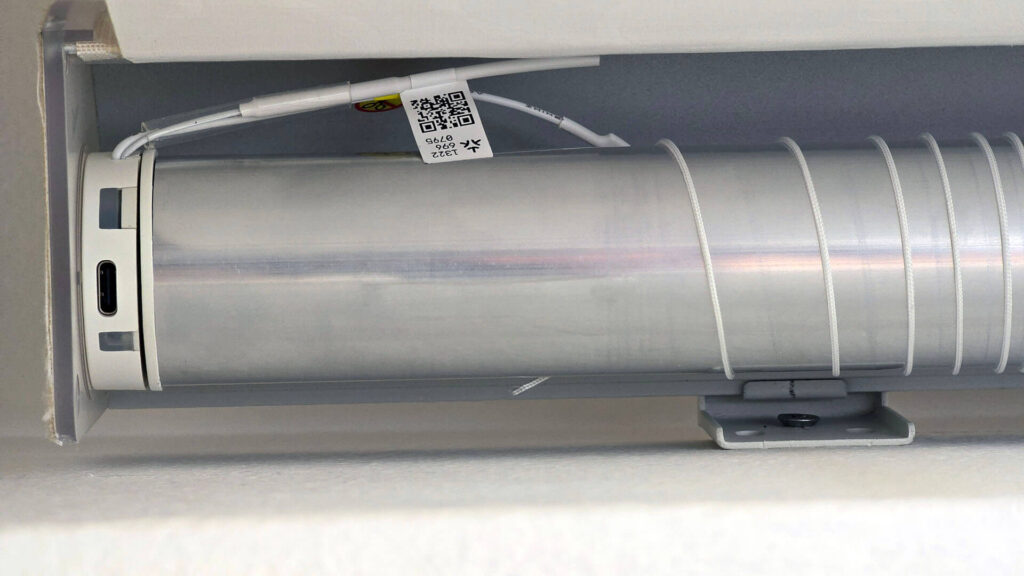
The motor is rechargeable via a USB-C port on the motor head. Graywind claims one full charge lasts 3 to 6 months depending on use, although I think the real number is closer to 6 months than 3. This comes from my personal experience with their Zigbee motors. they use very little power and are extremely quiet.
I also added the 16-Channel Basic Remote [ZB16] for $19. One remote is enough for all five shades. It has a small display that shows the active channel, which you cycle through with the arrows. Graywind pre-programs remotes ordered with the shades, so there is no pairing step after install.
Installation and Mounting
I mounted all five shades outside the window frames. The brackets and mounts gave me no trouble on any window. Graywind gives you a bunch of screws for each mount, but I found that a single, well-secured screw is more than enough to hold the shade in place. Obviously, this depends on the dimensions and weight of your shade.
One of the windows needed the bracket extensions. The wall curves at that spot, so a bracket screwed flat to it would not hold it straight. The extension let me pivot the bracket on the extension itself and line it up with the other side.
Matter Over Thread in Google Home
My friend uses a Google Nest Hub (2nd Gen) as his smart home controller, which also works as a Thread border router. Each motor ships with a plug in its USB-C port, and pulling it out powers the motor on. Once it is on, the motor is ready to pair. I added each shade in the Google Home app by scanning the Matter QR code directly on the motor. All five paired right away without any issues.
Once paired, each shade shows up as a regular window covering in Google Home. You can open and close it, or set an exact position with the slider. Google Home also shows the battery level for each motor, so you know when one needs a charge.
My friend does not use Home Assistant yet, so I couldn’t share the shades to it. Matter makes this easy later on. You can share an existing Matter device to a second controller, such as Home Assistant, without resetting it or removing it from Google Home.
Verdict
The Graywind Roman shades are a great choice if you want fabric Roman shades with Matter. They look beautiful, the install was easy and the Matter motor works quite well. The 16 channel remote is a cheap add-on that covers a full apartment. Always get one, even if going for Zigbee and Thread motors. You will need it to recalibrate or program the blinds.
It’s important to plan for the stack height of Roman shades before you order. If you do not have about 30-35 cm above the opening, pick a roller shade instead. A roller shade wraps tightly around the tube and needs far less space. Here’s where you can get Graywind Roman Shades.