Recently I started thinking about how many smart device types we already own and enjoy as enthusiasts. For instance, traditional PIR motion sensors grew into mmWave presence sensors that detect people sitting still. We now have fully local Zigbee RF cloners and bed occupancy sensors. Even small appliances like toasters are smart now.
I wanted to know where smart toilets stand in 2026 and what they actually do for you, so I spent a morning searching and reading. One model kept coming up first. It was the HOROW X70, and it also took the Best Overall spot in Bob Vila’s 2026 smart toilet roundup.
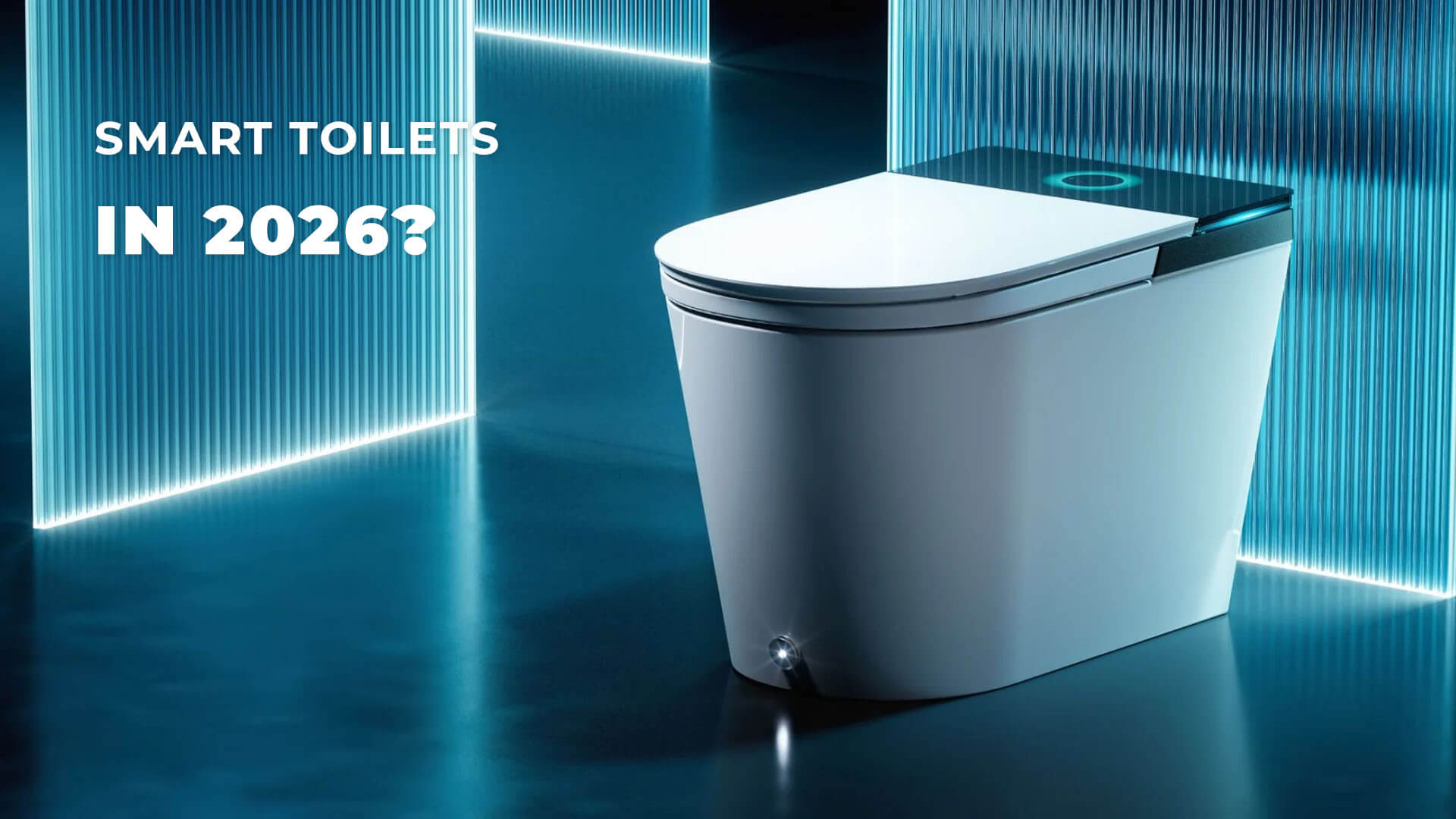
This is not a review. I have not installed a smart toilet or sat on one. I read the product page, the full installation manual, a couple of hands-on writeups and owner reviews. I formed a lot of opinions along the way, and this post is where I am sharing them.
I use the X70 as my example because it packs nearly every smart toilet feature into one fixture. If you want to understand the category, it is a good model to walk through.
What Makes a Toilet Smart
A smart toilet is a ceramic toilet with a bidet, heaters, sensors and a control board built into one unit. It connects to your water supply like any other toilet, and it plugs into a wall outlet. The smart part is automation. It opens its own lid, flushes on its own, washes you, dries you and cleans itself for the next user.
This is different from a bidet seat that you bolt onto an existing toilet. A bidet seat handles the washing. A full smart toilet also controls the flush, the lid and the bowl cleaning.
One thing surprised me as a smart home user. It appears most smart toilets have no app and no network connection at all, and the X70 is one of them. In this category, smart apparently means self-automated. It does not mean connected. I will come back to that later, because it was the first thing I looked for.
The Flush Matters More Than I Expected
From what I gathered, most smart toilets are tankless. They flush straight from the water line, so a weak house pressure would also give you a weak flush. The Horow X70 takes a different route, for one reason or another. It has a built-in tank and a 100W pump that pushes the stored water through the bowl.
But then what would happen if there’s no power for the water pump? That wouldn’t be a pleasant experience. Luckily, someone thought of that and installed a mechanical emergency flush in the Horow X70. You slide off a side panel and work a lever by hand, and it needs at least 0.2 MPa (29 psi) of water pressure. It seems clunky to me, but I like that it exists.
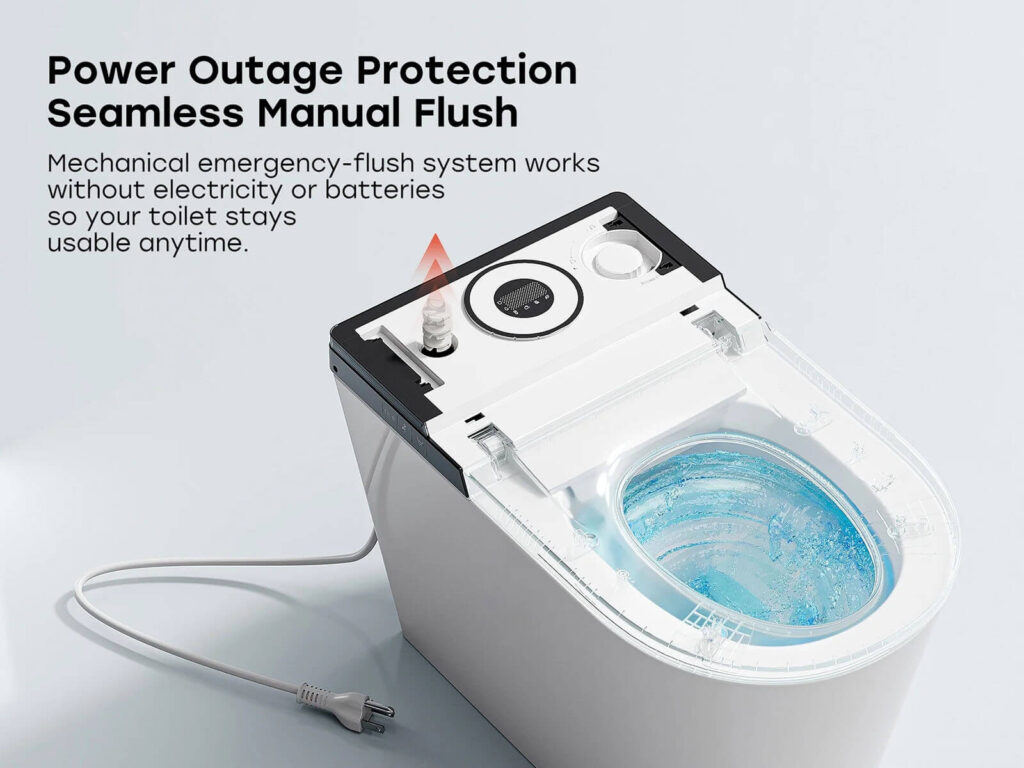
To me, this seems like the smartest design choice on the whole toilet. Your flush no longer depends solely on your plumbing or power lines. So instead of making it fully smart, you always have that manual control to fall back to. Bob Vila’s tester described the flush as strong even with lower water pressure, and that obviously matters more than a spec sheet number.
The X70 is also a dual flush toilet at 3.8 or 4.8 L (1.0 or 1.28 gal). A press on the remote gives a full flush, and a three second hold gives the half flush. If you leave it on automatic, every flush is a full one. I find that a bit odd. The toilet could already know how long you sat because of all the sensors, so it could pick the volume itself? Ah well.
Bidet Washing Is the Real Reason to Buy One
Bidet washing seems to be the main reason people buy all-in-one smart toilets. Almost every owner review I read said some version of the same thing. Once you get used to it, toilet paper feels like a step backwards. My research also led me to the r/bidet subreddit. Do not get me started on that place. Say one bad word about bidets there and those guys will eat you alive.
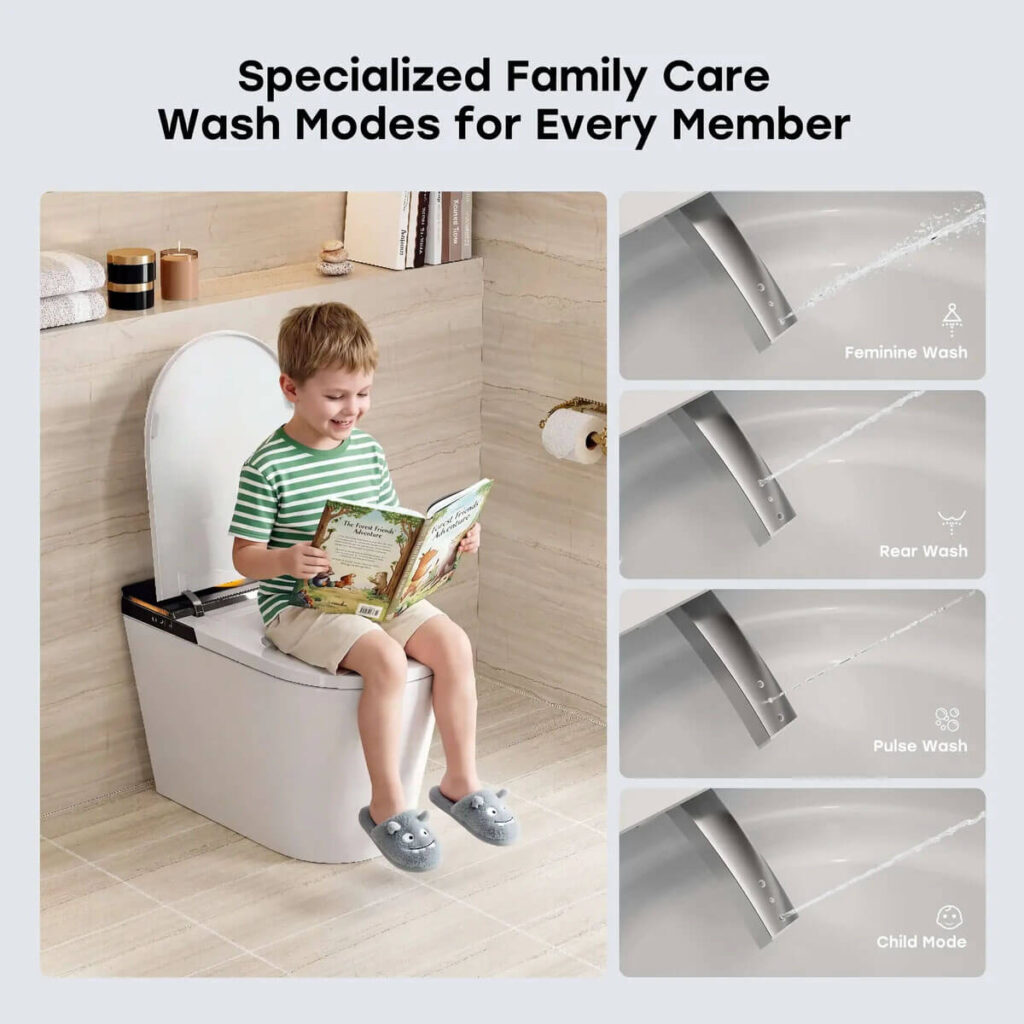
The X70 has rear and front wash, a pulse mode and a moving wash that sweeps back and forth. There is also a massage button that switches between warm and cold water mid-wash, and a setting that pulses the pressure between strong and weak. I mean, what? Pressure, temperature and nozzle position all adjust from the remote. Water temperature runs from 33 to 39 °C (91 to 102 °F) in five steps, plus an unheated setting. The water heats instantly as it flows, so you never run out of warm water halfway through.
The nozzle is a stainless steel wand with a detachable plastic tip. It rinses itself before and after every use. Being able to pull the tip off and clean it by hand also seems important. Not that it would be an enjoyable chore though. The nozzle is the least pleasant part of any bidet, and a removable one is the only kind I would want.
Child mode is a thoughtful touch. Small children often fail to trigger the seat sensor, so this mode lets the wash run without it. HOROW warns that water can then spray where nobody is sitting. I would keep a close eye on that one.
Heated Seat and Warm Air Dryer
The heated seat uses the same 33 to 39 °C (91 to 102 °F) range as the water. An ECO mode holds the seat at 30 °C (86 °F) while nobody is using it, then warms it back up when you sit. Bob Vila’s tester called it a luxury that is hard to give up. I believe them. It is the kind of comfort that sounds silly until you have it in winter.
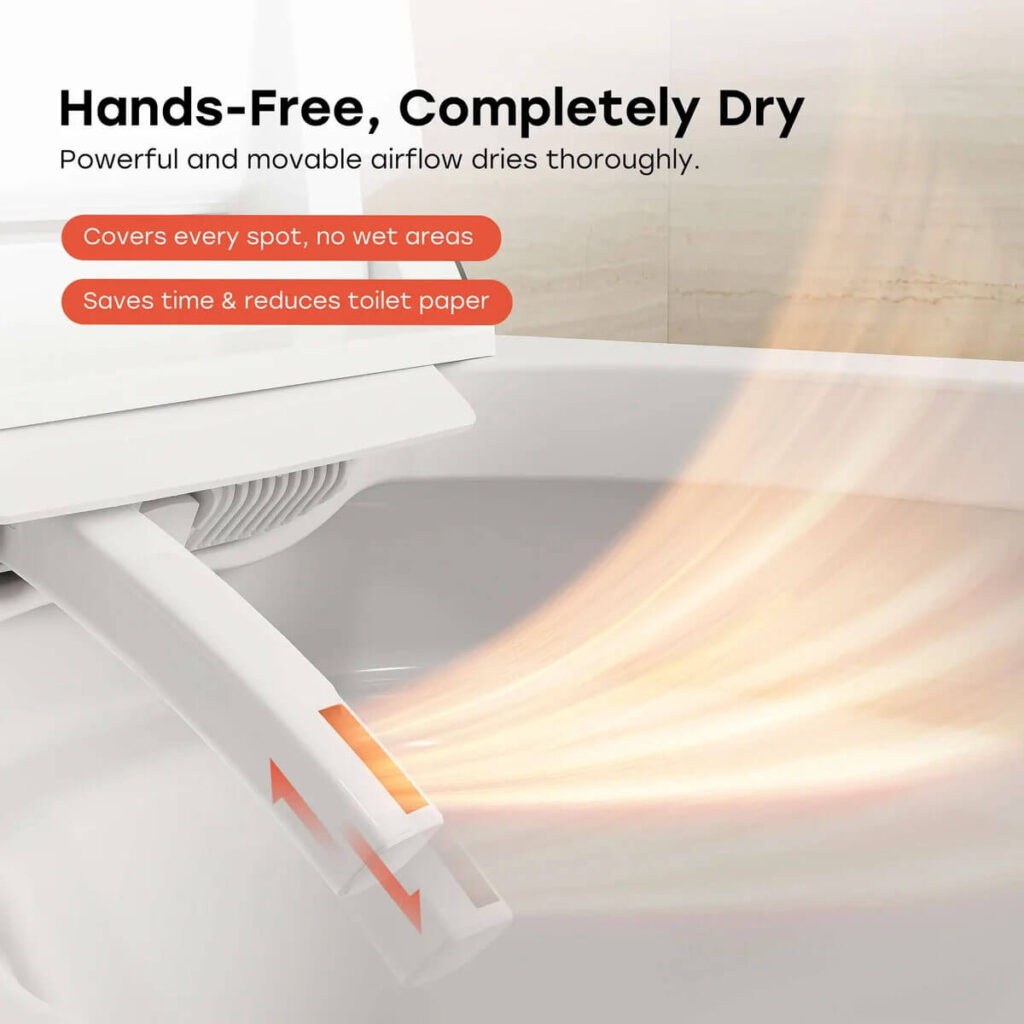
The dryer blows air at 35 to 48 °C (95 to 118 °F) and moves the airflow around while it runs. The full wash, flush and dry cycle from the side button takes about five and a half minutes. That is a long time to sit and wait. I suspect many people will cut the dryer short and finish with a little paper anyway lol.
My favorite comfort feature is Four Seasons mode. It reads the room temperature and sets the seat, water and dryer for you. Below 10 °C (50 °F) everything goes to maximum. Above 25 °C (86 °F) the seat heater switches off. This is the closest thing to a real automation in the whole toilet. My only complaint is that it cannot run together with ECO mode, and I would ideally want both.
Self-Cleaning Is Mostly About the Water
Self-cleaning sounded like marketing to me before I read the manual. On the X70 it turns out to be several separate systems. A UVC section inside the wash water line treats the water before it reaches you. A replaceable filter cartridge catches sediment, which HOROW suggests changing every three to six months if water quality is poor.
A separate UV lamp treats the nozzle for three minutes after you leave. For the bowl, the toilet makes electrolyzed water and mists it over the ceramic. With the auto setting on, this runs shortly after each use and roughly every eight hours. None of it uses chemicals, which I like.
The Foam Shield is where I get skeptical. It lays a layer of foam over the water to reduce splashing and hold in odors. It seems to only work with HOROW’s own foam cleaner, which is sold separately, and HOROW warns that other cleaners can clog the internals. A feature tied to one brand of consumable is a feature you keep paying for. I do not like that. With that said, it seems owners like the foam but complain about the refill price. It is off by default anyway, so you can ignore it.
Odour control uses a platinum catalyst cartridge with a small fan. It starts when you sit and stops three minutes after you leave. Bob Vila’s tester could faintly hear the fan but did not find it distracting. I think buyers need the right expectation here. Self-cleaning does not mean you never clean the toilet again. It means the water, nozzle and bowl stay cleaner between your normal cleanings.
Hands-Free Lid, Kick Flush and Radar
The X70 opens its lid when you approach. It uses microwave radar, a close cousin of the mmWave presence sensors many of us already run around the house. You can set the trigger distance to 80, 100 or 120 cm (31.5, 39.4 or 47.2 in). After you leave, the lid closes and the toilet flushes after 5, 10 or 15 seconds.
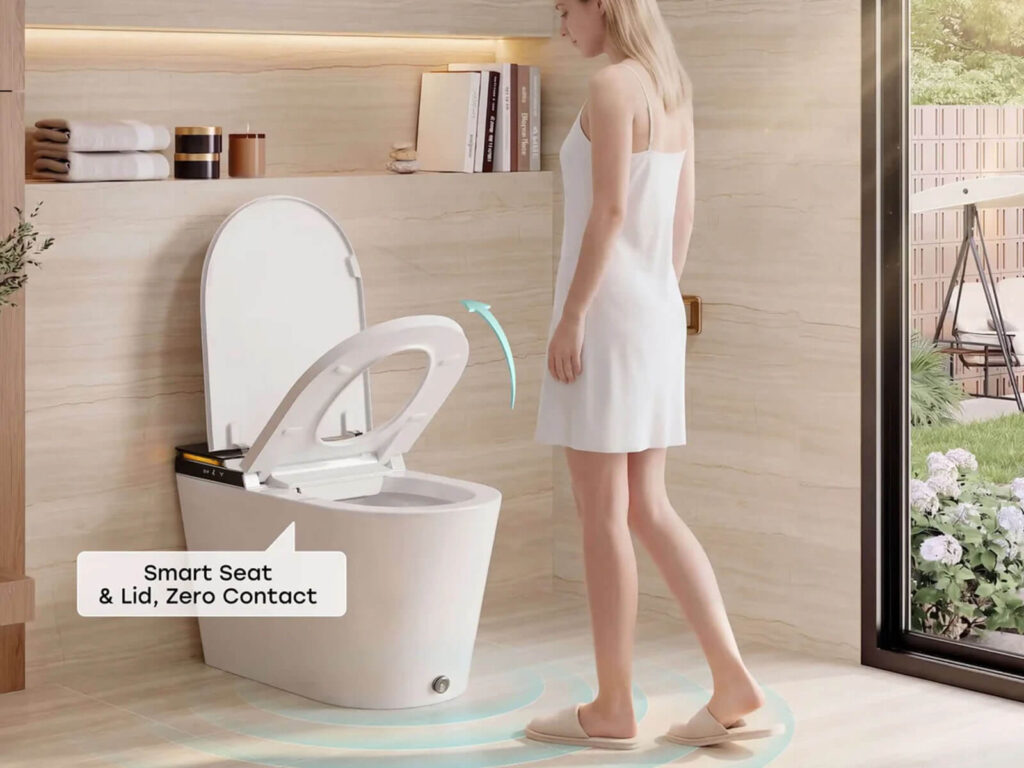
This is the feature that makes a smart toilet feel futuristic. It is also the feature I would tune first. If the lid opened every time I walked past to brush my teeth, I would lose patience quickly. The shortest distance setting is probably where I would end up.
A kick sensor at the front of the base handles the rest without hands. One tap opens the lid, two raise the seat, and three close everything and flush. One owner mentions that the seat rises slowly, which could be annoying in a hurry.
The remote is the weak spot. Half of it is a touch panel that has to be tapped awake. Bob Vila found that tapping a temperature button to check the current level also changes it. Many settings hide behind three second holds and two button combinations. The remote only has so many buttons, so I understand the reason. It is still the kind of problem an app would solve.
The Small Touches
The bowl night light turns on when the lid opens in a dark room. That is useful at 3 AM. The separate ambient light at the back cycles through several colors and has a mode that reacts to music. I would switch that one off on day one, but I can see some people enjoying it.
There is an optional reminder that beeps if you sit for more than 15 minutes without using the wash or dryer. HOROW frames it as protection against low temperature burns from the heated seat. I read it as a gentle nudge to put the phone down.
The toilet remembers your last settings, even through a power cut. It only stores one set, though. Several owners asked for per-person profiles, and I agree with them. In a shared bathroom, someone always ends up with somebody else’s water temperature.
Smart but Not Connected
This was the drawback I noticed most as a smart home enthusiast. The X70 has no app and no Wi-Fi or Zigbee connectivity. The filter warning and the foam level only show on the toilet itself, while every setting lives on the remote.
To be fair, this is normal for the category, and some buyers will see it as a plus. A toilet that never connects to the internet cannot be broken by a cloud shutdown or a forced update. All the automation runs locally on the toilet, and it works without any setup.
Still, I would like at least a local API. If I owned one, I would add some visibility myself. A power monitoring plug rated for the load would show when the heater and pump run. A Zigbee leak sensor behind the base would catch a failing supply hose early. Neither needs anything from HOROW.
Where Smart Toilets Stand in 2026
After all that reading, I think smart toilets have matured as bathroom fixtures. The pump flush, the power cut backup, the water sterilization and the removable nozzle on the X70 fix the weak spots I kept reading about in other smart toilets.
They have not matured as smart home devices yet. All the intelligence stays inside the toilet. For $1,599 you get a very capable fixture that runs its own automations well and talks to nothing else. That is a bummer in my book, but then again, I would only want connectivity on my terms. I would never use a cloud-connected toilet. A Matter or Zigbee one, though, I would use without a second thought.
I would seriously consider one for a new build, where I could place the outlet and water valve properly from the start. Local control is the next step I hope the category takes. You can get the HOROW X70 on their Website or Amazon. Check out Bob Vila’s 2026 smart toilet roundup for some more info on this topic.