

UPDATED 19.02.2026: This list has been completely revamped for 2026. Obsolete and redundant presence sensors have been removed and recommendations have been updated with newer and better smart presence sensors.
Short Intro
Those who follow SmartHomeScene’s reviews channel already know we test a bunch of different mmWave radar presence sensors and wrote detailed reviews for each one. Even after all this work, it’s hard to give an answer to the question of which mmWave radar presence sensor is the best. This might appear as being a simple question – but it’s hardly a simple answer.
You, as a user, might prefer one feature over another. You may prefer open source Wi-Fi devices or Zigbee sensors paired with ZHA/Zigbee2MQTT. Or maybe you want to create your own DIY ESPHome multi-sensor to integrate with Home Assistant.
There is no one size fits all when it comes to mmWave radar presence sensors.
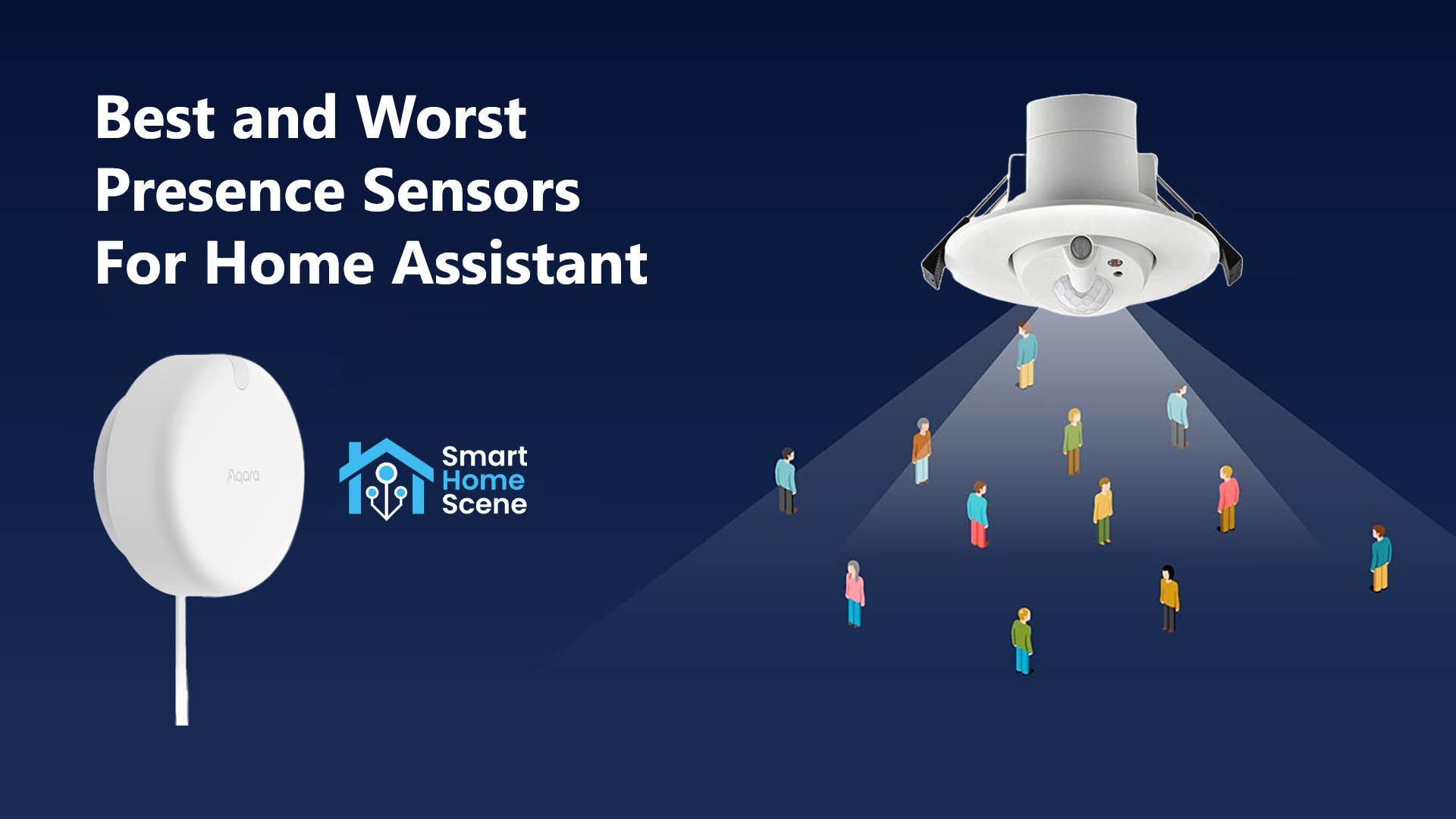
This article features the Best Presence (Occupancy) Sensors For Home Assistant in 2026. We’ve separated these in several categories and noted their most important features. The list will be kept constantly updated and refreshed as new and better devices appear on the smart home market.
Quick Picks: Best Presence Sensors for Home Assistant
If you don’t want to go through the full technical breakdown and reasoning, here are our top 3 recommendations based on performance, hardware capability, and price-to-performance ratio.

Best Battery Presence Sensors
The best battery-powered presence sensors for Home Assistant. These devices eliminate cable clutter, run for years on standard batteries, and deliver reliable, wire-free performance.
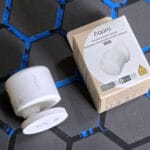
The new Aqara FP300 shook up the smart home space, constantly going in and out of stock ever since it was released. There’s a good reason for this too, as the FP300 does so many things right and ticks so many boxes that it’s very hard to ignore. Aqara officially labels the FP300 as a multi-sensor, as it combines a 60GHz mmWave radar, PIR motion sensor, as well as light, temperature, and humidity sensors into one compact device.
The FP300 is powered by a set of two CR2450 coin cell batteries which can keep the device going for up to 3 years. Considering the FP300 is much more than just a presence sensor, this is seriously impressive. In my teardown of the FP300, I discovered that the 60 GHz Possumic RS6130 sensor the FP300 uses is equipped with something called EFSENS™ ultra-low power technology, enabling the sensor to remain active for more than a year on a simple button battery.
Furthermore, while the 60 GHz mmWave radar handles static presence detection, the PIR sensor ensures fast motion triggers and keeps the mmWave awake only when it’s actually needed, further optimizing battery life. The environmental sensors, even when set at lower update interval, provide useful room data for automations. This combo of sensors is particularly useful and practical, as it allows a single device to replace several separate sensors without any compromises.
The Aqara FP300 is a dual-protocol device, allowing users to choose whether they want to use Zigbee or Thread, depending on their setup and ecosystem preferences. This makes it extremely flexible and well-suited for both Home Assistant power users who value full local control and Apple/Google/Alexa users who prefer ease of use over Matter. Switching between protocols is straightforward, and both modes proved stable in everyday use. With that said, I do prefer using Zigbee over Thread and the FP300 is no exception.
Overall, the Aqara FP300 feels like a very polished and thoughtfully designed product. It combines accurate presence detection, multi-sensor functionality, dual-protocol support, and excellent battery life into a compact package. Once you take the time to optimize and set up properly, the Aqara FP300 is the best battery presence sensor for Home Assistant.
Check out the Aqara FP300 review to learn more.
Also on Amazon UK, Amazon NL, Amazon FR, Amazon CA and SwitchBot Website.
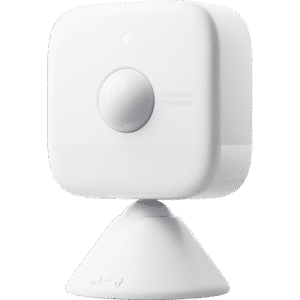
The new SwitchBot Presence Sensor is a battery-powered and budget-friendly combo sensor that packs a punch. It is equipped with the same 60GHz mmWave radar sensor as the Aqara FP300 (Possumic RS6130), and it utilizes the same PIR and mmWave operation principle. Put simply, the PIR sensor wakes up the mmWave radar which takes over static detection and operates until the room is clear. At that point, the radar goes back to sleep until it is woken up by the PIR again. Rinse and repeat.
The SwitchBot Presence Sensor is even more impressive than the FP300 when it comes to its power source. It uses standard AAA batteries which can keep it going for up to two years. Most users prefer using AAAs instead of coin cells and the SwitchBot ticks this box. Since the device is not packed with additional environmental sensors, I tend to believe the SwitchBot will out-endure the FP300 in raw battery life.
However, the SwitchBot Presence Sensor is equipped with only an illuminance sensor, used for light level automations. While I do think illuminance automations are often overrated, I found that this sensor works surprisingly well in my review.
The biggest drawback of the SwitchBot Presence Sensor is its Bluetooth connectivity. While the device is very fast to respond and activate without delays, Bluetooth by design introduces some latency compared to Zigbee. This will not be a problem if you have multiple Bluetooth proxies or a dedicated SwitchBot Hub deployed and are able to capture BLE packets reliably, but this does require additional hardware and a thoughtful setup.
Overall, I am a big fan of the SwitchBot Presence Sensor, especially considering it is very affordable.
Check out the SwitchBot Presence Sensor review to learn more.
Also on Amazon UK, Amazon NL, Amazon FR, Amazon CA and Domadoo.
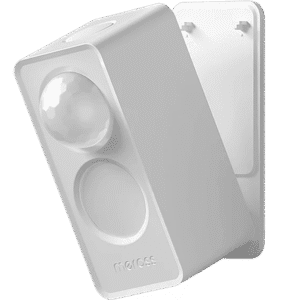
The Meross MS605 is the company’s first-ever Matter-over-Thread occupancy sensor. The MS605 succeeded the Meross MS600, which is a wired Matter-over-Wi-Fi multi-sensor. Considering Thread is a low-power protocol, Meross was able to power the new MS605 with a single CR123A lithium battery which has a 3-year battery life.
This device features triple-detection technology by combining a 24GHz mmWave radar, a PIR sensor, and a light sensor. The PIR sensor filters out non-heat movement like curtains while the radar detects micro-movements such as breathing. The light sensor enables brightness-based automations, should you decide to automate based on light level.
The MS605 offers a detection range of 6 meters for motion and 4 meters for static presence. Its IP67 waterproof rating and rotatable stand allow for flexible installation in various environments from bathrooms to attics. Using the Meross app, you can divide the detection range into three customizable zones which appear as separate sensors on third-party platforms for advanced automation.
For setup, the device pairs via Bluetooth through the Meross app and connects directly to Matter-enabled hubs from Home Assistant, Apple, Google, or Amazon. No Meross hub or app is required after the initial setup, as the sensor operates completely locally.
Best Wired Presence Sensors
The best wired presence sensors for Home Assistant. Powered via USB or PoE, these devices deliver continuous tracking, ultra-fast response times, and zero battery maintenance.
The Apollo Automation R PRO-1 is a powerful presence multisensor that combines dual mmWave radar modules with a full set of environmental sensors. It can detect movement, track presence accurately across multiple zones, and measure temperature, humidity, air pressure, light, UV index, and even CO₂ with an optional add-on.
With its dual mmWave radar sensor setup it really shines when it comes to zones and multi-target tracking. You can divide its detection field into up to three separate zones, letting the sensor treat each area independently, so you might have different automations or alerts depending on which zone someone enters or lingers in.
On top of that, its dual mmWave radar design allows it to track multiple people at once reliably. Even when more than one person is moving around in the same room, the sensor maintains awareness of their positions and can distinguish who is where. It’s not just motion vs no motion, it’s about who is where, across discrete zones, giving you far more control over behavior in complex environments.
Unlike compact sensors such as the MSR-2, the R PRO-1 is slightly larger but offers much more flexibility. It supports both Power-over-Ethernet and USB-C, making installation simple and flexible. It also includes LED indicators and a piezo buzzer for visual or audible notifications, plus optional mounting accessories for walls, ceilings, or gang boxes. At the moment, the Apollo R PRO-1 is the best wired presence sensor for Home Assistant.
Check out the full Apollo R PRO-1 review to learn more.
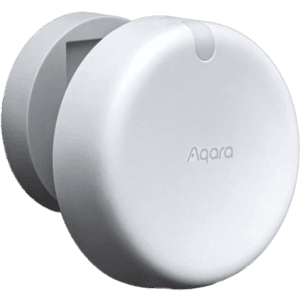
With the release of the first generation FP1 Presence Sensor, Aqara was so far ahead in the game that no other manufacturer managed to follow for quite some time. Defining proper detection zones was and still is, a distant thought for most smart home brands.
When the Aqara FP2 hit the market, it addressed the drawbacks of the original model, such as slow initial detection, and introduced new capabilities like real-time multi-person tracking. Through continuous firmware updates, the company resolved user-reported bugs and turned the FP2 into the most feature-rich presence sensor available today.
The FP2 is a great pick for real-time multi-target tracking as it offers live data of up to five people moving in its vicinity. This allows for the creation of sophisticated automations based on individual movement. While the live positioning and distance data itself is not exposed to other ecosystems like Home Assistant, I do not consider this a dealbreaker. In my opinion, automating based on live multi-person positioning is an overrated feature, as you do get the binary sensors of each zone exposed in Home Assistant.
The true strength of the FP2 lies in its ability to create up to 30 separate detection zones. Each of these zones can have its occupancy status tracked individually in Home Assistant. Again, this requires a one-time setup in the Aqara app, which you can freely uninstall after your zones are configured.
Check out the full Aqara FP2 review to learn more.
Also on AliExpress, AliExpress 2, Amazon UK, Amazon NL, Amazon FR and Domadoo.
If you are looking for a cheap ($15!) ready-made solution with no fancy features, the Sonoff SNZB-06P is a great pick. Unlike most on this list, this sensor is based on a 5.8GHz radar, but performs perfectly fine in detecting human presence in a room.
The SNZB-06P has a detection range of up to 4 meters for static targets at an angle of 100°. It also has a built-in illuminance sensor for automations, although this sensor updates only when motion or presence is detected. The sensitivity threshold and detection timeout clusters for the SNZB-06P are configurable in Zigbee2MQTT, so the basic functionality of the device can be tweaked.
Since the SNZB-06P is a wired presence sensor, it operates as a Zigbee router, capable of relaying traffic from adjacent devices back to the coordinator. You can install it almost anywhere, as the base allows for versatile mounting (ceiling, wall, or corner), with the ability to adjust the angle for specific, precise, or broad area coverage. Priced at around $15, the Sonoff SNZB-06P is the best budget presence sensor for Home Assistant.
Check the Sonoff SNZB-06P review to learn more.
Best ESPHome and DIY Presence Sensors
The best ESPHome and DIY presence sensors for Home Assistant. These are fully local devices with unmatched firmware flexibility, configuration settings, and the highest levels of data for advanced automations.
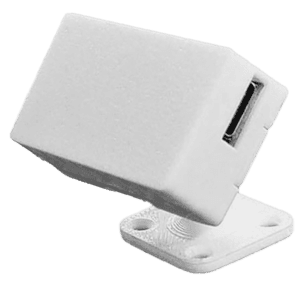
The Apollo Automation MSR-2 is the smallest presence sensor ever made. Measuring just 40x24x15mm, it is almost unbelievable how such a compact device can be so feature-rich. Like its predecessor the MSR-1, the MSR-2 measures presence, temperature, humidity, air pressure, UV index, and illuminance, with an optional CO2 sensor available. Despite this, the MSR-2 is still 30% smaller than the original model.
While the MSR-2 is the smaller sibling of the absolute powerhouse Apollo R PRO-1, its appearance is deceiving. This feature-packed multi-sensor is also equipped with a piezo buzzer and an indicator LED for audible and visual notifications. It can reliably track static targets up to 6 meters at a 120-degree angle and works fully locally within Home Assistant. The MSR-2 ships with highly configurable ESPHome firmware which works with HA out of the box.
To improve installation flexibility, the MSR-2 is available with several optional add-ons. These include an outlet mount for direct wall installation and an articulating stand that allows the device to rotate and face any direction. Another welcomed addition is a specialized USB-C adapter that orients the port backward, allowing you to hide all cables from sight. I have three MSR-2s in my own smart home, and they are, by far, my favorite smart multi-sensors.
Check out the full Apollo MSR-2 review to learn more.
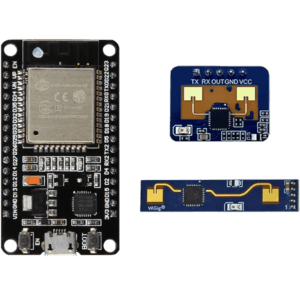
Hi-Link’s mmWave sensor line-up is the most popular choice out there, especially when you consider price as the main factor. A while back, I wrote an article about integrating the Hi-Link LD2410B and LD2410C presence sensors in Home Assistant with an ESP32 board and shared the code to copy-paste in your ESPHome config.
Alternatively, you could also use the LD2412 or LD2450, as official ESPHome support has been added for both sensors and they are easy to integrate. The LD2410B/C is still the easiest to work with, as it has excellent community support and a lot of usage examples.
Recently, I wrote an article for making your own Zigbee presence sensor with an ESP32 and a LD2410C. It gained quite a following, as DIY Zigbee devices aren’t as easy to make as ESPHome devices. Sadly, I’ve since paused the project because of personal time constraints. However, it has been built upon and improved by a fellow enthusiast (notownblues). It is now better than it ever was, even featuring a zone-building add-on for Home Assistant!
You can find the repos here and build your own: SHS-Z2M-Presence & SHS-Z2M-Presence-Zones.
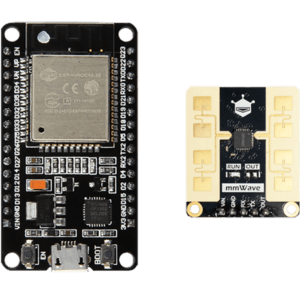
If you prefer the DIY (do-it-yourself) path, consider the DFRobot C4001 and ESP32 combo. This mmWave radar sensor has a whopping motion detection distance of up to 25 meters! It can reliably detect static presence at 16 meters with a beam angle of 100×40°.
The sensor is specifically made for detecting human presence in home automation. It is the successor of the already popular and widely used DFRobot SEN0395 sensor. What’s more, it’s available in two variants: one with a maximum distance of 25 meters and another with a maximum of 12 meters. I wrote a detailed guide for creating your own occupancy sensor by attaching this sensor to an ESP32 board.
Check out the full ESP32+DFRobot C4001 DIY guide to learn more.
Presence Sensors to Avoid (Worst picks)
Below this heading are all the mmWave presence sensors you need to avoid, for one reason or another. The devices in this list either have major drawbacks, unfixable flaws or there are simply better alternatives out there in the same price range.
Moes/Linptech Zigbee Presence Sensor ZSS-LP-HP02
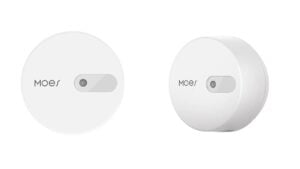
The Moes/Linptech Presence Sensor model ZSS-LP-HP02 is probably one of the better sensors on this list in terms of static presence detection. It’s also very fast in the initial movement detection, has a great build quality and is highly configurable in Zigbee2MQTT.
Unfortunately, this Moes ZSS-LP-HP02 Presence Sensor spams your Zigbee network HARD. There is no way to reduce payload traffic, per entity or fully, since Tuya uses non-standard Zigbee implementation and data is pushed and not polled. There is also no option to turn off the onboard LED, which flashes constantly when presence is detected.
Deploying 3+ of these and your Zigbee mesh network will likely suffer or crash. It’s best to avoid it, since there are better alternatives.
Tuya Zigbee Presence Sensor with Siren ZG-205ZL
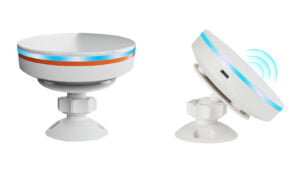
The Tuya Zigbee Presence Sensor with Siren model ZG-205ZL is another presence sensor you need to avoid. This device is plagued with false negative triggers, it doesn’t respect user set parameters like delays and sensitivity and is inaccurate in general. The included siren is a gimmick at best, producing lame quality in mono audio.
Tuya Zigbee Ceiling Presence Sensor LY-TAD-K616S
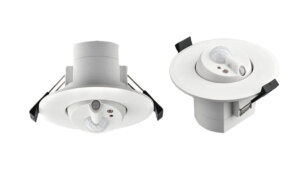
The Tuya Ceiling Presence Sensor LY-TAD-K616S is advertised as a radar presence sensor, but it’s actually a double PIR sensor in disguise. Some developers somewhere possibly thought they could create a static human presence sensor by combining two PIR motion sensors and a luminance sensor, writing some clever magic code and make it work like they decided to advertise it. Totally incorrect and an unmitigated lie.
Tuya Zigbee Presence Sensor PS-HPS
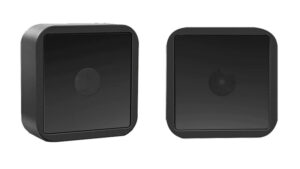
The Tuya Zigbee Human Presence Sensor PS-HPS is probably the ugliest presence sensor you will find floating around. The case is being reused for something else by Tuya, maybe a ZigBee/BLE gateway. And even though it does a decent job at detecting static presence, it’s very slow at initial detection. There is no reason to consider this device, since there are far better alternatives out there.
Tuya Zigbee Presence Sensor TZ-GS-200
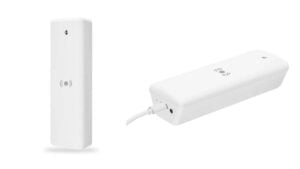
The Tuya Zigbee Presence Sensor TZ-GS-200 is another sensor you should skip for various reasons, the main one being Zigbee2MQTT and ZHA support is non-existent right now. You could use an external converter, but as it turns out this device also floods your network really hard.
Tuya Zigbee Presence Sensor ZG-205Z
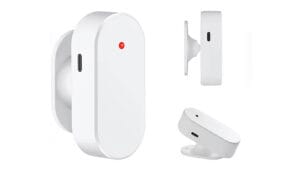
This Tuya Zigbee Presence Sensor ZG-205Z produces sub-par performance and uses an unreliable 5.8GHz mmWave radar sensor. Even though the mmWave radar is capable enough to perform better than it does, it’s most likely utilized badly in this presence sensor. While it operated better in the Sonoff SNZB-06P, it’s completely gimped in the Tuya ZG-205Z.
Tuya Zigbee Presence Sensor SZR07U

The Tuya Zigbee Presence Sensor SZR07U performs as advertised, detecting presence reliably and accurately. However, it also floods your Zigbee network which is a common and unfixable issue in these devices.
Tuya Zigbee Presence Sensor _TZE204_ztqnh5cg
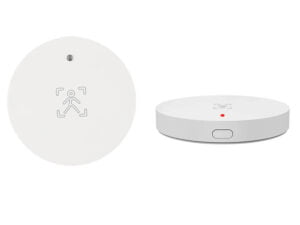
The Tuya Zigbee Presence Sensor _TZE204_ztqnh5cg model should be a new and improved version of the popular ZY-M100, however it falls short in several ways. Illuminance reading is spammy, unreliable and it does send a payload every 2 seconds on average which would be considered spam.
FAQ
mmWave vs PIR sensors: What is the difference?
While both are used for automation, they use different technologies. PIR (Passive Infrared) sensors detect changes in heat signatures and require significant movement to stay active. mmWave (millimeter-wave) radar sensors emit high-frequency radio waves that can detect micro-movements, such as the rise and fall of a chest during breathing. In Home Assistant, PIR is best for “fast-on” lighting in hallways, while mmWave is essential for “stay-on” presence in living rooms or offices. The Aqara FP300 or SwitchBot Presence Sensors use both, resulting in fast triggers and reliable static presence detection.
What is the best battery-powered presence sensor for Home Assistant?
For users who cannot run wires, the Aqara FP300 is currently the best battery presence sensor due to its 3-year battery life and dual-protocol (Zigbee/Thread) support. While the SwitchBot Presence Sensor and Meross MS605 are excellent budget-friendly alternatives, the FP300’s use of 60GHz mmWave technology and high-quality environmental sensors makes it the most versatile wireless option for a Home Assistant setup.
What is the best wired presence sensor for Home Assistant?
The Apollo R PRO-1 is the best wired presence sensor for Home Assistant due to its professional-grade dual-mmWave radar system and unique PoE (Power over Ethernet) support. While the Aqara FP2 is a strong competitor for zone mapping and the Sonoff SNZB-06P is the undisputed budget king, the R PRO-1’s native ESPHome integration and ability to track multiple targets with zero latency make it the most powerful and reliable wired choice for a local smart home.
What is the best presence sensor for a bathroom or shower?
The Meross MS605 is highly recommended for bathrooms due to its IP67 waterproof rating. Standard presence sensors can be damaged by high humidity and steam over time. Furthermore, the Meross MS605 is battery-powered, which means it can be installed in any position in your bathroom.
Can mmWave presence sensors detect you while sleeping?
Yes. Unlike traditional PIR sensors that require movement, mmWave sensors detect “micro-movements” such as the rising and falling of your chest while breathing. This makes them ideal for bedroom automations where you want to keep lights off or maintain a “Sleep Mode” state as long as the bed is occupied. However, you do need to install them properly and optimize their settings such as sensitivity and range to eliminate false triggers.
Can mmWave radar see through walls?
Yes, mmWave radar can penetrate common building materials like drywall, glass, and plastic. While this allows you to hide sensors inside cabinets for a cleaner aesthetic, it also means the sensor can detect movement in adjacent rooms or hallways through a closed door. To prevent these “ghost” triggers in Home Assistant, it is essential to calibrate your Maximum Detection Range and Sensitivity settings to match the exact physical boundaries of the room you are monitoring.
Do presence sensors work with pets like dogs and cats?
Yes, mmWave sensors are sensitive enough to detect pets, which can often trigger false home automations. To prevent your cat from turning on the living room lights at 3 AM, you should look for sensors with adjustable sensitivity gates or PIR-mmWave dual detection. By setting the sensor to ignore movement below a certain height or using the PIR sensor as a “gatekeeper” (which is less sensitive to small heat signatures), you can effectively filter out most pets.




You missed LD2450 and LD2420 in the DIY Esphome section. LD2450 is better in multi-person detection. LD2420 has a better range and is cheaper compared to LD2410B/C.
Thanks Yousaf,
I didn’t miss them, I am simply sharing what I think is the best in my opinion.
The LD2450 doesn’t have official ESPHome support, which makes it harder to work with with.
The LD2420 is cheaper for a reason, it’s worse in detecting static human presence and breathing than the LD2410.
While it does hold some advantages over the LD2410 (range), it produces more false triggers than the LD2410.
This why I picked the LD2410 as the current top pick in the category.
I’ve added a short explanation about the other two.
I will happily change the ratings whenever I do some more tests.
Cheers
I am using all three ld2410B, LD2410C and LD2420, in my testing sitting in front of 2420 is the same/on par with ld210b/c. I use my only ld2420 in my office. LD2410B/C does allow finer granular control though.
LD2420 has the advantage of being 3.3V powered too.
I’m using all 5 LD2410c, it work perfectly to automate all light my home. It is best price.
i tested almost all the presence sensors from hilink and it’s completely different sensors with different purpose in mind, most of them left unfinished in development. only the ld2410, lad2410b and ld2410c works as a presence sensor should and it’s mostly because the others don’t focus in the “still motion” and have other fancy features like gesture detection, planned to be for toilets to flush and so on. not even the ld2410s is the same sensor and at unprecise as all the other models (which might not matter depending on where it should be placed and what it should be used for)
so:
ld2410 (first one with no bluetooth), ld2410b (same one WITH bluetooth, which makes it easier to check levels with their app) or ld2410c (the bigger version with breadboard friendly pins) are the good ones, none of the others are, -if you need precision and accurancy.
ld2450 i would rather call a target tracker, because thats all it’s good at, fun but not useable because it easily lose a target, it got better in the last firmware but still just a geeky toy, no pratical usage since you cannot count on it. – this sensor they actually worked much longer on that some of the others non-2410 models but i guess it will never be what we wish it could b. 🙁
Hi, I’m sadly missing the everything presence one kit, but I think these is based on you didn’t had a chance to get it and test it, correct? I would really like to see in the future an updated version when you had the possibility 🙂
Hi, I tested the EP1 extensively:
https://smarthomescene.com/reviews/everything-presence-one-vs-aqara-fp2-comparison-review/
Thank your for this very extensive overview, this really helps alot! I also came across these new Tuya presence sensors with integrated relays and was wondering if you also tested the recessed/ceiling mounted version. I always see it listed together with the one you tested (wall mounted) and was wondering whether they have identical specs?
Most likely yes, but I am not sure.
I haven’t tested it yet, so please don’t take my word for it.
The Tuya ZY-M100 also spams your network every second, regardless of whether it not there is presence detected. I have two different models and they both do it. Shame because they are otherwise a good sensor for the price.
I have the first 5.8 GHz version which doesn’t spam at all.
Can you check the logs if it’s only the illuminance value changing when a payload is pushed?
https://github.com/Koenkk/zigbee2mqtt/issues/19045
I have bought ZY-M100-24G based on your recommendation and it spams the Zigbee network as well. This model is not what’s in the title of that Issue, but it is mentioned by some other people further down.
Even if it is sending luminance updates, the fact that it is doing so every second can bring down the network if you have enough of them.
Where’s the EP Lite in this roundup?
If you actually bothered to read the article, you would know it’s ranked as no.1 for Home Assistant.
re: “If you actually bothered to read the article, you would know it’s ranked as no.1 for Home Assistant.”
no you ranked it “best overall” and longer down you write the MSR-1 is the best for home assistant, easy to get confused with which one you would prefer.. :-p
and i can only agree if it’s the MSR-1 from apollo, great selection of sensors on a very well designed pcb, and for the same pricerange as the others, should be the winner in all ways 😉
I’m still somewhat surprised every time I see the Aqara at the top of any list. I placed that thing on each wall of my living room at different heights, reset it multiple times, updated the firmware and after an evening could not even get the initial setup completed. At any distance it stopped detecting anything on it’s left side. The ghosting was horrible even when aimed at bare walls. In fact it picked up ghost motion more reliably than it picked up me dancing around the room like a fool. there seems to be a parity of people who love it and think it works perfectly and people who can’t even get past step one. Knowing that a large portion of people have horrible experiences with that device would automatically take it off of my list even if I had had a positive experience.
Thanks to your recommendation I’ve been running few Tuya ZY-M100 sensors for about a year and they’ve been top-notch! Insanely fast and the reset time is great. I replaced few Aqara motion sensors with these.
But now I’m spoiled and I want to add some new generation Tuya sensors. Having the continuous (static) presence option is nice, for those tricky areas and corners that require fine tuning.
Do you mind me asking a little more about your network (how many devices overall, how many of these ZY-M100 etc.)?
Sorry to pry, but I also bought some, based on these recommendations. Then I noticed they were spamming the Zigbee network. Some further research confirmed this (see my comment above). My understanding at the time was that more than a couple of them might bring the whole Zigbee network down. So I put them in a drawer and never looked back.
But maybe I over-reacted. Or maybe I should just get them out and give them another try…
Great Overview!
From what I understand of their documentation, the msr1 „zones“ are defined only by distance, while Aqara, ep lite and Screek 2A can measure in x-y coordinates. Is this correct?
I’d like to define zones, such as „couch“, etc.
Yes, you are correct.
Only the FP2 can do zones like you are explaining.
As always, thanks for the great recommendations!
However, I don’t think the Sonoff SNZB-06P makes a good recommendation, IF we’re using Home Assistant and intend to use the presence and illuminance readings in an automation, e.g. turn on the lights when there is presence and its dim.
In a scenario where the last known illuminance reading is ‘bright’, the automation above may not work due to a race condition between presence turning occupied and illuminance going from bright to dim, as the Sonoff updates illuminance only when there is presence. Seems like a drawback to not flooding the zigbee network with constant illuminance updates. Partly why the Linptech/Moes performs so well, but floods the zigbee network as you mentioned.
Hoping you’ll add a disclaimer to recommending the Sonoff, so that people know what they are getting into.
I have been wondering about this ‘illuminance race condition’ problem as well, thanks for your comment. My understanding is that there are a few dedicated Zigbee light sensors, that send the illuminance data regardless of motion or not, maybe I will try some of those.
I have also been on a quest to find a good mmWave sensor that doesn’t require an app, nor spam the network.
Maybe I should DIY both of the above together with ESPHome and some of the recommended bare sensors. It certainly seems much cheaper. And I could control the transmission chattiness.
I have built out a primarily Zigbee network, so I suppose I could afford a few Wi-Fi based devices. For the kind of presence detection that mmWave devices are used for (and light readings on a long interval), it wouldn’t even matter if they didn’t react right away (I have Zigbee PIR for that).
Did I just convince myself? Maybe… lol
not an issue at all. You can use wait for trigger in HA to wait for dim state.
for the tuya presence sensor ZY-M100 and Tuya ZY-M100-S
Tuya Zigbee Presence Sensor ZY-M100 ,it has 5.8G and 24G,24G presence have a distance switch now in zigbee2mqtt now.then it won’t spam all zigbee network now.
https://s.click.aliexpress.com/e/_oFYu1ZZ
https://amzn.to/3PjQ6Z6
need to choose 24G radar.not 5.8G
and it has a new presence sensor built-in relay .it has three housing.but same hardware.
https://www.aliexpress.com/item/1005008054312504.html
I use the Sonoff SNZB-06P
It’s great, especially for the price.
The only issue I have is that it randomly detects motion for just a second every once in a while so a light will pop on in and bathroom even though no one is in there
But it goes right back off so not that big of a deal
Please please please don’t become one of these blogs where every single product is a “best for…”.
There’s no such thing. There is always a best one overall, and the best one is not always different for all the use cases. Showing it like that shows an obvious attempt at fitting more affiliate links, and more importantly, it makes the article useless to read. It makes the reader more confused with options as there is no clear way to properly compare and decide.
Personally it makes me lose all trust in the review. More and more blogs seem to be going this way, and I assume it’s a SEO thing alone. Please don’t. I loved your blog.
Axel,
Thank you for the constructive criticism.
Rest assured, this blog wont become one of those mainstream useless websites.
I will continue to test random devices, dismantling them and talking about their individual pro and cons.
The reason you are seeing a few best of posts is because I was asked by many readers to make them. If you check the links, you will notice more then half of them are not affiliated links. That’s not the goal of these lists. The goal is to list good, local-only devices that work with Home Assistant.
But, I get where you come from and understand what you mean. Maybe there is a way to do these lists better. Youve given me a few ideas.
Thanks again for the feedback.
How do these sensor preform outside, I’m especially interested in the cheap zigbee ones? Are there any false positives triggered by lights turning on – like isn’t that the case with regular PIR sensors?
There is a smaller presence sensor than all in this list, Astrix S1 is 3.7×1.7cm.
https://www.ebay.com/itm/135441349916
This is new, great find! I’ll get one for testing.
Hello,
Thanks for the review !
What do you think about 60GHz MR60BHA2 sensor though ?
Have you ever had the chance to try it ?
Thanks
No, I haven’t.
It’s a breathing and fall detection radar, so it’s not really a presence/occupancy sensor.
After reading the reviews I went with the MTG075-ZB-RL.
I purchased the model by Wenzhi, marked with Zigbee, AC 85~265V, 24GHz.
After checking it closely, it seems that it’s a MTG275-ZB-RL, also supported by Z2M.
Any idea what the differences might be between the 075 and 275?
They are both white labels for the same device (different vendors), albeit a different device signature.
Both are available in 24GHz and 5.8GHz radar variants, so as long as you got the 24GHz, it should perform great.
Is there a “commercial” sensor to:
– detect presence (& trigger a switch)
– display temperature & humidity
– display time
I’ve seen a few with the second item in the list but would like to have a more comprehensive solution.
Some of us can do all these with popular MCUs, a breadboard, sensors and sketches but don’t have the skills (me, personally) to design a 3D enclosure for printing. Your guidance would be appreciated. Thanks.
P.S.
Love the fact that you “can’t please all the readers all the time.” You are offering a “service” better than “the other guys” who unbox but do not drill just a little bit lower with objectivity.
As far as I’m aware, there is no such device on market right now.
Nothing combines an mmWave radar with a screen to display time and temp.
Thanks for the feedback, much appreciated!
Do you have tested the UltimateSensor Mini? What do you think about? I’m looking for a presence sensor with a mic for the HA Voice. https://smarthomeshop.io/en/products/ultimatesensor-mini
I have not tested the UltimateSensor, so I cannot vouch for it. On paper, it does looks good.
Great site! I use your reviews often when choosing products to my smarthome.
You list one Moes sensor as one to avoid. (Moes/Linptech Zigbee Presence Sensor ZSS-LP-HP02)
Do you have any experience with this ceiling “spot” one Moes also make?
https://moeshouse.com/products/smart-ceiling-motion-detection
I thinking about buying this one due to the clean design, but if its spamming the network I dont want to go for that one.
I have not tested this one, but chances are it also floods your network.
Can’t for sure, but almost all Tuya sensors do.
Waiting for this article’s 2025 update. 😉
Its in the works! Currently testing some more sensors 🙂
I love your dedication. Fantastic reviews!
Thank you, appreciate the kind words!
Thanks. I like the detailed description, but a summary comparison table would make it easier to understand the differences and what is the best.
I live in a tropical country, even when the aircons are on I tend to turn on the ceiling and standing fans, too. Is there a sensor that can reliably filter out fan movements?
Yes, but you will have to tweak the hell out of it. The Apollo MSR-2 or R PRO-1 allows you to configure gate sensitivity at different ranges, bypassing the fan. Aqara has an AI learning feature that does this automatically. So does the SwitchBot.
did you ever try de LinknLink e motion sensor?
I have one on the way, but it seems too app dependent to me.
Glad to see the 2026 update just in time!
I can’t help but notice Everything Presence products not beeing here at the moment, is that in the pipeline? Looking forward to your look at Everything Presence Pro since we really need more PoE devices for more complete setups in our homes.
Yes, but I do need to test it first.
I’ll get one for testing!
Great review, thank you very much. You are in my favorites now for all Home Assistant related. Any chance you could add one more new sensor:
https://www.shelly.com/products/shelly-presence-gen4-white?_pos=2&_psq=pre&_ss=e&_v=1.0
Great brand, but not products were perfect so far so wondering which side is presence sensor. Cheers
Yes, I’ll try to get a sample.
Saw it at IFA, I just didn’t realize they released it.
Thanks!